History of Colt International Ltd: Decade by Decade

1920s: The Beginning

1924 was when Jack O’Hea met William H. Colt, and the Colt story began.

During WW1, William Colt had learned carpentry and joinery, which he later used to start a small business making timber buildings. He started out mainly making poultry houses, but quickly made the ambitious move to start creating domestic properties. However, this new venture needed investment and partnership— and passionate businessman Jack O’Hea was the perfect match.

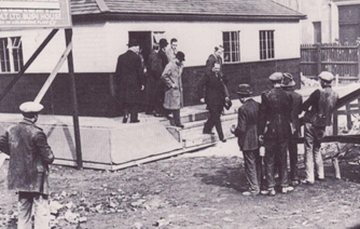
By 1925, the two partners had formed W.H. Colt Ltd. One of their early successes was a template for a miner’s cottage, all designed by Colt himself. The miners had gone through considerable hardship during this time period and their cause was noticed by the Prince of Wales. When the Colt miners' cottage came to his attention in 1926, the Prince agreed to open a specimen house for public viewing, with a series of well-known personalities of the time visiting the building and garnering press attention. 

Always looking to future and where improvements can be made, the company also became the first British company to import Canadian cedar shingles after O’Hea was impressed by their look and robustness at the 1923 British Empire Exhibition. These quickly became a signature feature of their buildings and serve of just one early example of how innovative thinking and entrepreneurial spirit was becoming embedded into the Colt brand. 
1930s: Colt Ventilation

In 1931, O’Hea met aerodynamic engineer Heinrich Kuckuck through Colt, who at the time had a small business making vehicle and ship ventilators. While he was full of brilliant and innovative ideas, he hadn’t had much success commercially. O’Hea saw a new business opportunity in Kuckuck and brought him over to London, leading to the creation of Colt Ventilation. 

This quickly came when, later that year, a new steam locomotive for the LMS Railway demonstrated a worrying problem. The smoke from the coal-fired boiler blew straight into the driver’s eyes making it difficult to see the signals ahead. Kuckuck invented a device that deflected the smoke out of the driver’s section of the train. Seeing the wide applicability of this technology, it was repackaged and marketed as a domestic product known as the ‘Colt Chimney Cowl’. O’Hea had this product patented, and it became the start of Colt Ventilation’s success. 

By 1937, O’Hea bought out Kuckuck and Colt’s shares, becoming the sole owner, although still trading under the name Colt. He expanded the timber building side of the business and had notable projects including the famous ‘Little Canada’ on the Isle of Wight, evacuation camps that were used during the war, and even a summer house at Buckingham Palace.

1940s: Wartime Innovation

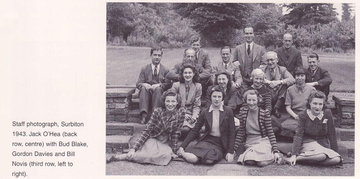
During WW2, businesses had to be innovative, learning how to adapt to assist with wartime efforts whilst maintaining sales. Colt Ventilation succeeded in this, with the help of inventor Gordon Davies. Davies had designed a black-out ventilator that allowed air circulation into people’s homes but no light to pass through. His invention was encouraged by the government, but Davies struggled to market his product. So, he joined forced with O’Hea, becoming a part of Colt.

This meant he could concentrate on his inventions while jack handled the commercial aspect. Thousands of Colt black-out ventilators were sold throughout Britain and were even used on warships. By the end of the war, ventilation formed more than 85% of the company’s sales, thanks to Davies’ creative genius and O’Hea’s commercial acumen.

Davies was responsible for nearly every design that Colt sold after the war ended. He designed the Constant Flow ventilator for prefabricated homes which were being built to rehouse the population, and later, the Clear-Opening ventilator, improving workplace conditions in steel mills all over the country. Whatever problem was presented to them, Colt would quickly jump in with a solution that solves the problem. 

For example, a steam-laden textile mill in West Yorkshire told a Colt salesman that they needed a device that could deal with condensation. In response, Davies developed the Inflow Unit during 1949. This was a self-contained unit fitted with a fan and heater to bring air into a building. Solving the problem of condensation build-up in steam-filled factories, this invention would later be used to extract noxious fumes from buildings.


1950s: Fire Safety & Material Advancement

In 1953, following a devastating fire at a General Motors manufacturing plant in the US, Vauxhall approached Colt to create a specialist fire ventilation systems for their Luton site. Whilst a significant milestone for the business, the order was at first seen as a one-off bespoke design. That was until fire damaged Jaguar’s Coventry plant in February of 1957. 

Seeing the industry need for a tried and tested solution to protect such buildings and their occupiers, Colt decided to roll out an automatic fire ventilation in Britain. This decision was backed by a letter from Coventry’s fire chief outlining how a system like Colt’s would have greatly reduced the impact of the Jaguar fire, as well as the findings of a detail research project funded by Colt with the Department of Scientific and Industrial Research at the Fire Research Station.

Colt’s fire control system was widely adopted, and smoke control became another one of our key areas of specialism alongside ventilation and heating. If there were any doubts about its effectiveness, it proved its performance during a fire at Vauxhall Motors in Luton later in 1963— the place where the system was first installed— with the company’s chief fire officer commenting that “the Colt ventilators are worth their weight in gold.” 

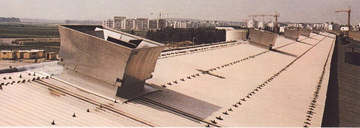
Another key Colt innovation of the era was pioneering the use of aluminium alloy in rooftop ventilators. The material had been widely used during wartime as part of efforts to design aircrafts that were lighter yet more durable. Colt saw an opportunity to use it within their rooftop ventilators to make them lighter, making them easier to install and avoiding the expensive works to upgrade existing roof structures. Proving the strength and durability of these products, many ventilators manufactured by Colt in the 1950’s are still in working order today. 

The 1950s also saw Colt take its first steps into the overseas markets, with its ventilators made under licenses in Australia, New Zealand and South Africa. 

1960s: European Expansion

The summer of 1960 saw Colt venture into the European market when Braat Bouwstoffen was keen to introduce Colt Ventilation Ltd’s products to Holland. A Braat en Colt Ventilatie NV was established and became responsible for marketing and assembling Colt’s products in Holland and Belgium— although manufacturing remained in Britain.

In 1966, the Dutch factory outgrew itself and located to a bigger and better site at Cujik close to the German border. From here it could supply the Dutch and Belgian markets and also the German market. The way forward in Continental Europe was now established with Colt providing the products and European counterparts taking over the marketing and day-to-day management of the business overseas.

Colt Ventilation’s entry into Europe, long before Britain joined the common market, was to be one of the most significant steps in the company’s history. 

1970s: Global Reach & Recognition

In 1972, Colt bought out Braat from the joint venture and took full ownership of the German, Dutch and Belgian companies, creating Colt International. It opened a French company in 1973 and an Austrian one in 1974. Since research and development was one of the key frameworks of Colt, it was decided in 1974 to equip the German factory with its own R & D Laboratories. With British industry suffering from recession, the company turned its attention towards exports and won several substantial orders, notably in the Middle East where a Dubai office was opened in 1976.

For the founder, Jack O’Hea, the late 70’s were marked by several major recognitions. He was awarded an OBE in 1976 for services to the export trade, the Colt Universal Louvre won a Design Council award in 1977, which was presented to him by His Royal Highness Prince Philip. He then retired from the chairmanship in 1977 at the age of 80 and became life president.

1980s: Solar Acquisition

Colt’s innovation and expansion didn’t slow down after O’Hea’s retirement. In 1980, the North Sea oil industry came to Colt International Ltd with a request for its largest order to date. This was to install the Universal Louvre system for an oil platform. The Universal Louvre was (and still is) very popular as it provides high air ventilation with minimal weather interference. It can also be aesthetically altered to blend in with the building, or designed to stand out as an architectural feature. Another notable project for the Universal Louvre was the HM Naval Base Clyde. The company embraced this venture into ambitious civil and marine engineering projects.

Colt also wanted to branch out into new areas of the industry, namely external solar shading. In 1981, Colt acquired Alco Bouwspecialitieten BV— or Alco for short. In the late 80’s, Colt’s management board decided to focus on its primary business of ventilation and heating, to strengthen and preserve their core products. As a result of this, any aspect of the business that was not a core interest was shut down. Only the solar shading activities continued, since these were regarded as having future potential and fit with Colt’s overarching environmental impact plan.

1990s: Intelligent innovations

In the early 90s, Colt combined its innovative inventions and debuted its Shadovoltaic Wings. In this system, photovoltaic (solar power) cells are mounted onto the Universal Louvre system. This investment gives better value for money for the consumer due to the dual purpose design. Additionally, the Louvres carrying the cells move to face the sun during the day, increasing the power output. 

Technological innovation also saw the creation of Colt Virtual Reality Ltd in 1993 to devise computer-based solutions to fire emergency planning in buildings, with particular concentration on the means of escape in high rise buildings. This progression into advanced computer systems continued, when in 1995 the One Per Vent system was launched. This was a cost-effective system which permits each ventilator to be controlled individually and as part of an automatic control scheme. 

2000-10s: Legacy & Sustainability

Alongside maintaining production of its core products, ventilation, heating and smoke control, Colt was committed to contributing positively to the environment and continuing innovation. 

In 2013, Colt participated in the world’s first algae bioreactor façade. Being showcased at the BIQ house in Hamburg for the International Building Exhibition. The façade is made up of flat panel glass bioreactors that encase microalgae resulting in an independent system where solar, thermal, heat and algae are used to generate hot water. This also results in an interesting and constantly changing architectural feature that can be implemented on buildings around the world. The bioreactive façade won the Zumbobel Group award for applied innovations in 2014. A testament to the quality of Colt’s core products, their Coltlite Ventilator won the Red Dot: Best of the Best Award in 2017. 

What’s next?

From its humble beginnings in timber buildings, to becoming a global leader in ventilation, fire safety and environmental innovations, Colt has continually evolved. Through decades of continued invention, strategic expansion and a commitment to quality, Colt has shaped industries and improved working conditions worldwide. By embracing new technologies and championing our people, we hope to continue to innovate and adapt, helping the world create safer and more sustainable environments in which to thrive. 

Contact us

We deliver tailored solutions across Smoke Control, Climate Control and Louvres. For more information on how we can help you with your project, get in touch with our team.

Main Navigation