
How to ensure smoke control systems on acquired building assets are fully compliant
During handover of any building, it is essential that the designated Responsible Person (typically the owner or facility manager) receives clear information about the fire safety assets, how these are designed to operate as a system in support of the fire safety strategy and a log of their maintenance or commissioning.
Following the updates to Approved Document B in England[DH1], it is now a legal requirement for project teams to provide this detailed information where any ‘relevant building’ is constructed or extended.
On existing projects, however, this information may only have been partially logged or may be found to be absent altogether. To ensure the information is complete and accurate, owners or facilities managers should look to carry out a full audit of all smoke control assets and supporting paperwork to gain an understanding of how they’re expected to function as a system, and to develop an inspection and maintenance plan to ensure they are proactively serviced and continue to function correctly.
In this article, we look at what information should be collected as part of this review, how it should be logged, and how Colt can assist where information is found to be absent. Detailed information on this process is also available within the Smoke Control Association’s (SCA) free guide Guidance on Maintenance of Smoke Control Equipment.
What information should be provided or collected at handover?
When taking control of any new building asset, the Responsible Person should be provided with a range of information about the existing system. This should include:
- Asset register – clearly detailing the product manufacturer and model number for each asset, along with its essential characteristics (further information on these Essential Characteristics can be found in chapter 8 of from the SCA).
- System design – identifying where all of the different components within a system are located within a building and how they should interact together.
- Fire strategy – this should clearly detail the design intent for all aspects of the fire safety system, how they should operate in the event of fire, evacuation routes and processes, provisions for fire services to navigate the building, and planned preventative maintenance schedules for the building.
- Cause and effect strategy – identifying the potential scenarios that could lead to a fire and how the smoke control system should respond in each scenario.
- Maintenance logs – When inspections took place and who carried them out, along with clear information about any repair or maintenance work that was carried out and by whom.
- Fire risk assessment – this should be up to date and confirm that the system is appropriate for the building.
If any of the above information is absent or clearly incomplete, it is important to commission a full survey of your system. It is highly recommended that this survey is carried out by a suitably qualified company, such as Colt, which meets the SCA’s definition of a Competent Maintainer. Head to our Service and Maintenance page to find out more.
Even where all the documentation is provided, you should look to verify that the information provided is accurate, this should begin with developing a full asset register.
How to create an asset register
When generating a register of fire safety assets within a building, or auditing the existing document, the best starting point is to carry out a visual inspection of the building. Particular attention should be paid to areas such as staircases, corridors and lobbies which may be required to act as evacuation paths or routes for emergency services.
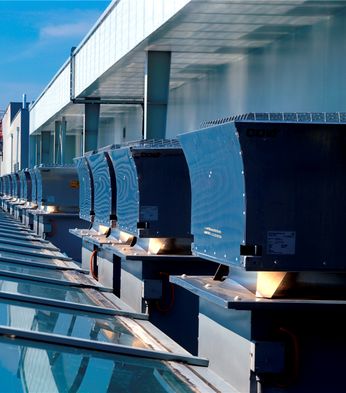
Alongside obvious measures, such as signage, sprinklers, fire or smoke detection sensors and alarms and fire extinguishers, smoke control systems can incorporate a wide range of other systems which also form part of the ventilation system for a building. These can be natural or mechanical ventilation, or active measures such as smoke control dampers. These may be supported with control panels, and separate extraction fans.
To support facilities managers, the SCA has provided some example images of typical assets and where they can be found in Appendix D of the Guidance on Maintenance of Smoke Control Equipment.
Each asset should be logged in a table with key information including the asset type, its serial and model number, Essential Characteristics, where it is located within the building, any supporting documentation and required minimum inspection/maintenance patterns (guidance on this can also be found in the SCA guide).
In practice, it makes sense to ask the Competent Maintainer you intend to appoint to carry out regular service and maintenance work to conduct this audit and, where necessary, to undertake a full fire safety risk assessment. This ensures that the information that is collected is accurate and complete, and that the systems are fully compliant with the relevant legislation.
How Colt can help ensure your system is fully compliant
With over 70 years of experience working within the smoke control sector, Colt is here to support you from handover through to long term services, maintenance and repair of your smoke control systems. We operate the largest UK wide network of support engineers and are able to service and maintain any system, regardless of who designed or manufactured the components. We were also the first UK company to be certified to both IFC SDI 19 and SDI 05, meeting the SCA’s definition as Competent Maintainers of smoke control systems.
Our service and maintenance packages are tailored to your building, providing value for money and peace of mind. As part of our standard onboarding process for all new contracts, our trained engineers undertake a detailed asset compilation. Where issues are identified or additional detail is needed, our team can also carry out full fire risk assessments. This can include gaining an understanding of the design intent for the building systems, drawing up a full asset register, fire strategy and cause and effect strategy, inspecting, maintaining and repairing assets as required and, finally, highlighting any potential issues with the existing provision which need to be addressed.
Once these steps are completed, and any actions carried out, our service engineers can then oversee the proactive maintenance of your system. Where possible, we try to arrange for the same engineer to be assigned for each visit to site, and we also provide a call out service 24/7 365 for complete peace of mind.
Contact Us
We deliver tailored solutions across Smoke Control, Climate Control and Louvres. For more information on how we can help you with your project, get in touch with our team.