
Your smoke control maintenance FAQs answered
Keeping smoke control systems properly and regularly inspected, tested and maintained is a critical responsibility, both to ensure the safety of occupants and to meet legal requirements for your building or workspace. In this article, we answer some of the questions our service team are most commonly asked around the service and repair of these systems.
If you need further information on any of the points discussed, or would like to discuss setting up a smoke control contract for your building, don’t hesitate to contact our experienced team today.
1. Who is responsible for ensuring fire safety within a building?
You’re responsible for fire safety in a business or other non-domestic premises if you’re considered to have control over the building or workspace. This can include:
- the employer
- the building owner
- the landlord
- an occupier
- anyone else with control of the premises, for example a facilities manager, building manager, managing agent or risk assessor
These persons or organisations are referred to under slightly different names within key UK fire regulations depending on which country you are located in. In England and Wales they are referred to as the Responsible Person under the Regulatory Reform (Fire Safety) Order 2005 (RR(FS)O). In Scotland they are known as the Duty Holder under Fire (Scotland) Act 2005 and in Northern Ireland as the Appropriate Person under Fire Safety Regulations (Northern Ireland) 2010.
The responsibilities of these individuals/organisations are broadly similar in each country, requiring them to ensure proper safety measures are in place to ensure the safety of occupants.
2. What are my responsibilities when it comes to smoke control systems?
Key duties for the responsible individual/organisation relating to smoke control systems include:
- ensuring proper provision of smoke control measures and that they are kept in good working order through regular inspection, maintenance and (where necessary) repair.
- maintaining detailed records about a system including its components, how they function as a system, and a log of inspection and maintenance works.
Some of these duties can be carried out by a suitably trained in-house person, whilst others call for a certified and accredited service provider.
3. What are the penalties for failing to properly maintain smoke control systems?
If a smoke control system is found to be insufficient/inappropriate for a building or improperly maintained, then you could face unlimited fines or even imprisonment. To ensure the safety of occupants and full compliance with your legal obligations, we strongly advise that you get a professional opinion on your smoke control system maintenance from an accredited provider such as Colt International.
4. How often do smoke control systems need to be inspected and serviced?
As smoke control systems are mostly installed for the protection of life safety and fire fighter access in an emergency, they should be maintained in full working order at all material times – this is a requirement of the RRO (The Regulatory Reform (Fire Safety) Order 2005), Fire (Scotland) Act 2005, Fire Safety Regulations (Northern Ireland) 2010 and BS 7346-8.
There are daily, weekly, monthly, three-monthly, six-monthly and annual testing and maintenance tasks which must be carried out.
Smoke control systems should be tested weekly and with maintenance carried out at least annually according to BS 7346-8. If the system is found to be non-functioning during routine testing, or has become damaged, then it must be immediately repaired. You will need to notify your local fire and rescue service of any faults with your smoke control system that cannot be rectified within 24 hours. You can find out where to submit these details for your local service on the National Fire Chief’s website.
If the system performance is reduced or compromised in any way and cannot be repaired immediately, a risk assessment should be carried out by the Responsible Person to determine if any additional measures should be put in place until full performance is restored.
The Smoke Control Association (SCA) has provided more detailed guidance on inspection schedules for smoke control systems within Guidance on Maintenance of Smoke Control Equipment.
For maximum peace of mind, Colt International create a clear inspection and maintenance schedule on all our service contracts and ensure this work is carried out to the latest requirements under SFG20 – the industry standard for building maintenance.
5. Who can carry out inspection work on smoke control systems?
A Competent Person can carry out standard inspection work. This can be a member of your facilities team provided they have the training, experience and knowledge of smoke control systems in general, and of the layout of the building, in order to adequately undertake inspections of the systems as required.
As part of a Colt service package, we can provide support on the timing and requirements for this work.
6. Who can carry out maintenance work on smoke control systems?
The Smoke Control Association (SCA) recommends that any service and maintenance work is carried out by a Competent Maintainer. It defines this as a “maintenance organisation having appropriate training, skills, knowledge, experience and behaviours suitable for undertaking maintenance of smoke control systems”. To ensure they meet these requirements, it recommends that the organisation is certified under the IFCC SDI 19 scheme for maintenance activities.
Learn more about what makes a Competent Maintainer
Colt International was the first company in the UK to be certified to both IFCC SDI 19 and SDI 05 (fire curtains). All our maintenance work is carried out by experienced engineers in line with the current SFG20 standard.
7. Is getting a smoke control system tested by a company the same thing as a maintenance visit?
No, functionality tests are only designed to check the system is working. To comply with legal requirements, these tests should actually be carried out on a weekly basis. You must also have a full, yearly smoke control system maintenance visit from a specialist where your system will be fully serviced to consider the cause & effect, check correct airflows, opening and closing times, charge rates, motor resistance levels, water tightness etc.
Opening and closing a smoke ventilator only on a test (as less experienced companies may do) is not a service. A company that carries out this type of testing may not be qualified or equipped to carry out a comprehensive and legally sound smoke control system maintenance check. If you have been following this approach, we suggest you contact Colt for a free consultation or site visit to double check you are not at risk of your smoke control system failing in the event of a fire.
8. How can I ensure my building is maintained to the latest smoke safety standards?
To ensure full compliance, we advise appointing a maintenance firm who are certified under IFCC SDI 19 and operate in line with SFG20. This standard has been created by the Building Engineering Services Association (BESA) to translate the latest legislation, regulations and best practice into actionable service and maintenance schedules and tasks for engineers. It is kept fully updated with the latest standards to ensure full compliance.
9. How can I identify if I have smoke control assets in my building?
Generally, in residential blocks you will have a smoke control system in the form of an automatically opening ventilator (AOV) at the top of a flight of stairs, which will look something like the image. These can be activated by a smoke or heat detector, either directly or from a smoke detection system or possibly a fire alarm system, so they should open in the event of smoke and/or heat being detected.
Your system may include other assets such as yellow/orange break glass controls or dampers which open/close when a fire is detected. The SCA has included a useful visual guide of common smoke control assets within Guidance on Maintenance of Smoke Control Equipment.
However, not all elements of a smoke control system may be easily identifiable or locatable. To properly understand your system, it is essential to have supporting documentation including an asset register, fire strategy and maintenance logs.
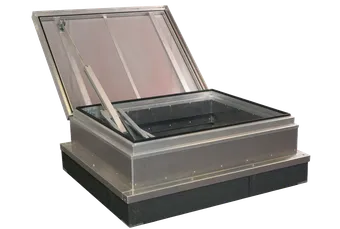
10. I’ve recently become responsible for a building. What information should I have about the smoke control system?
When taking over a building, the person responsible for a building should be provided with a range of documentation which can include:
- Asset register – including the product manufacturer, model number and essential characteristics.
- System design – identifying where the different measures are located and how they should interact together.
- Fire strategy – this should include how the system should operate in the event of fire, evacuation routes and processes, provisions for fire services to navigate the building, and planned preventative maintenance schedules.
- Cause and effect strategy – identifying possible scenarios and how the smoke control system should respond.
- Maintenance logs – detailing when and who carried out each inspection and any work undertaken.
- Fire risk assessment – this should be up to date and confirm that the system is appropriate for the building.
If any of the above documentation is missing, then we highly recommend appointing an experienced and qualified smoke control maintenance organisation to carry out a full asset compilation and to develop any other missing fire safety strategies and/or risk assessments. Colt International can support with this.
Learn more about what you should receive at handover and how Colt International onboard new smoke control customers to ensure compliance.
11. Can Colt provide smoke control service packages for buildings across the UK?
Yes, Colt International is the UK’s largest smoke control maintenance provider, offering nationwide coverage and regional contacts. With engineers across the country, we respond within 18 hours on average, and in emergencies, we aim for a 4-hour response time. Where possible we look to assign the same engineer for each visit to your site, ensuring they know the system inside and out.
12. Does Colt have an emergency call-out facility?
Yes, for contract customers we offer a 24/7, 365 days call out facility in case of emergencies.
13. Will Colt service smoke control systems manufactured or installed by another company?
Yes, Colt International will service and maintain any smoke control system. Our experienced engineers can carry out an audit to ensure your current provision is both compliant and operating correctly. We also provide an extensive spare parts service to allow efficient repairs where required.
14. Do you install control panel monitors to enable remote system monitoring?
Yes, Colt has a GSM device which can be installed into your control panel and will notify three people by email if there are any issues detected on the system. Our helpdesk is one of these contacts, so we will know immediately if there is any issue that needs addressing. In certain instances, we will be able to advise an on-site person remotely over the phone to fix and clear the fault on the system. This helps to reduce call-out charges and delays in fixing issues. It enables us to respond more quickly if there are repairs needed, but also makes you aware instantly that the fire brigade needs to be notified if a fix within 24 hours is not possible.
15. Can water come into the building through a smoke vent?
If a smoke vent is not closing as tightly as it should then water can drip in and onto the floors below. This issue most commonly occurs due to a problem with the controls or debris on the blade left by birds or the wind. These types of issue can be quickly identified and addressed as part of regularly scheduled inspection and maintenance, protecting your building from potential rainwater damage.
We hope that the above questions and answers help you with some of the more basic maintenance-related knowledge you may have, but please contact us with any other queries or if you would like us to help you set up a service contract – our knowledgeable team is always happy to help.

Contact Us
We deliver tailored solutions across Smoke Control, Climate Control and Louvres. For more information on how we can help you with your project, get in touch with our team.